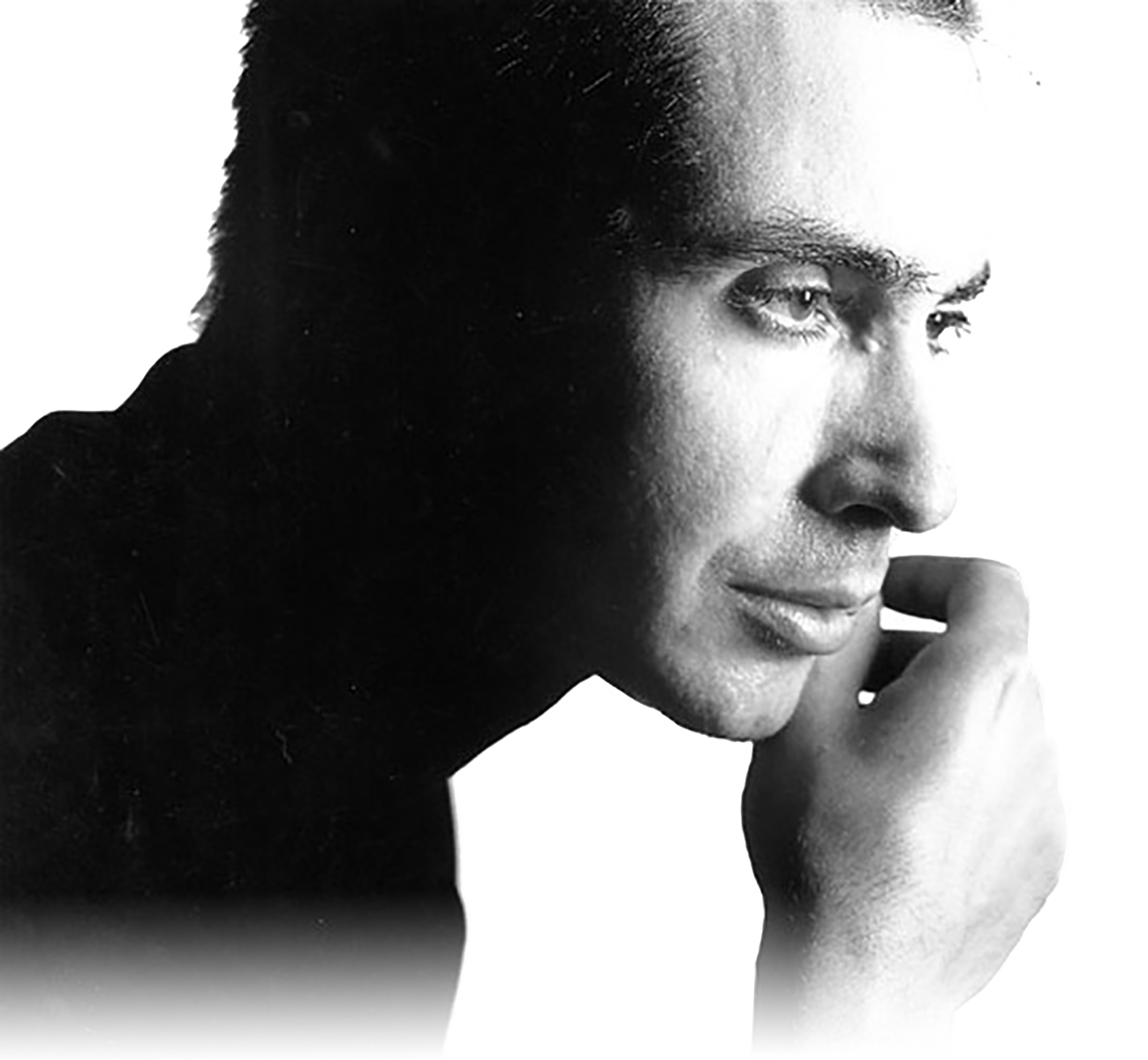
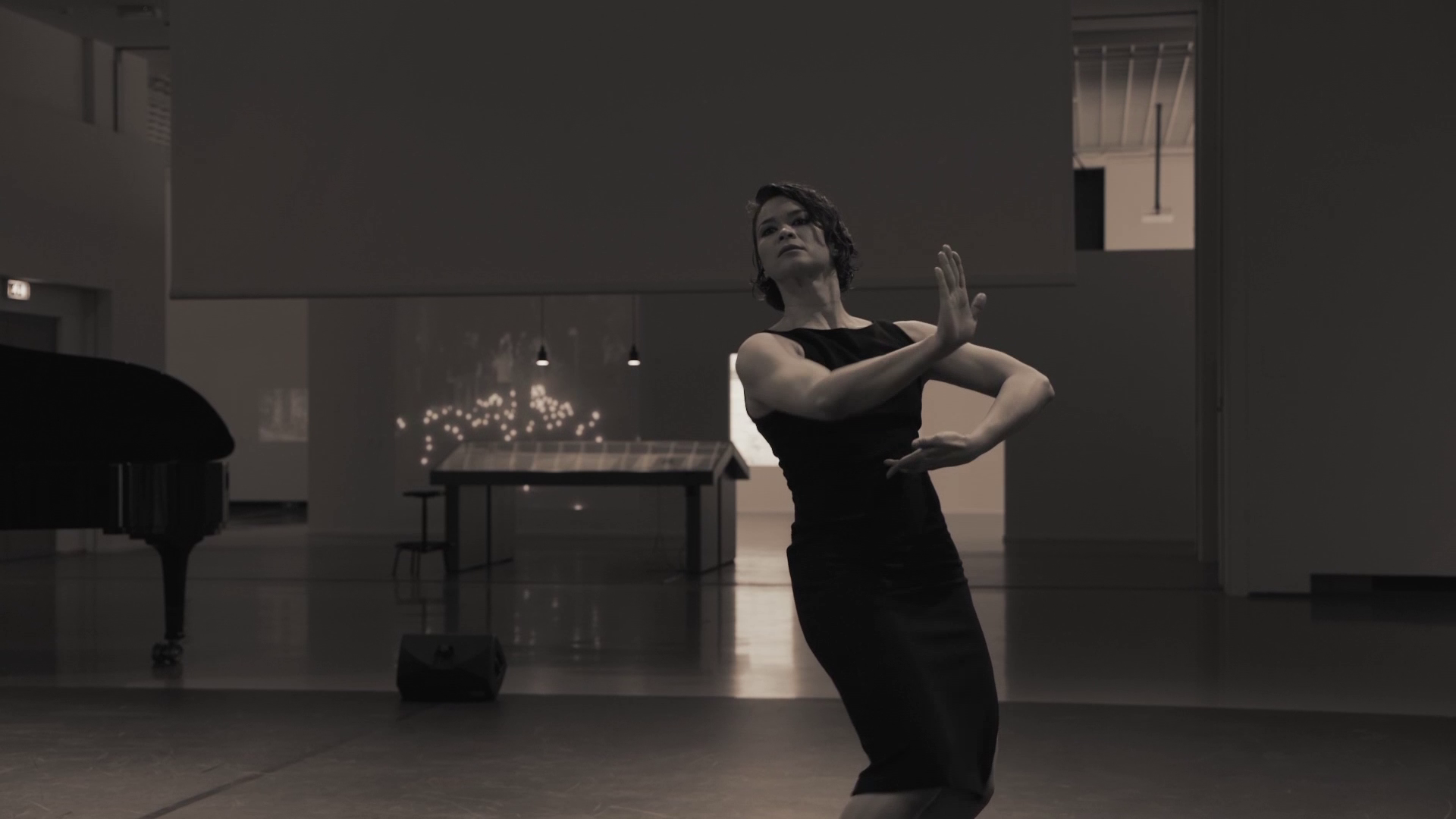
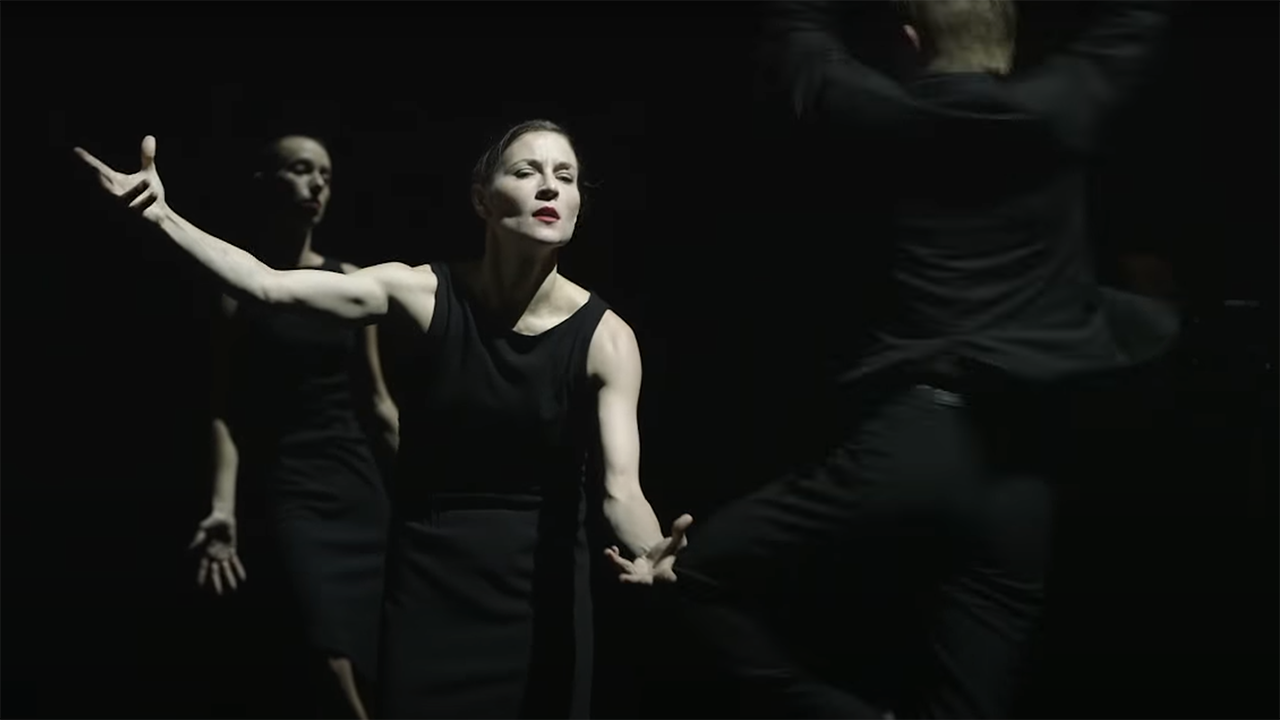
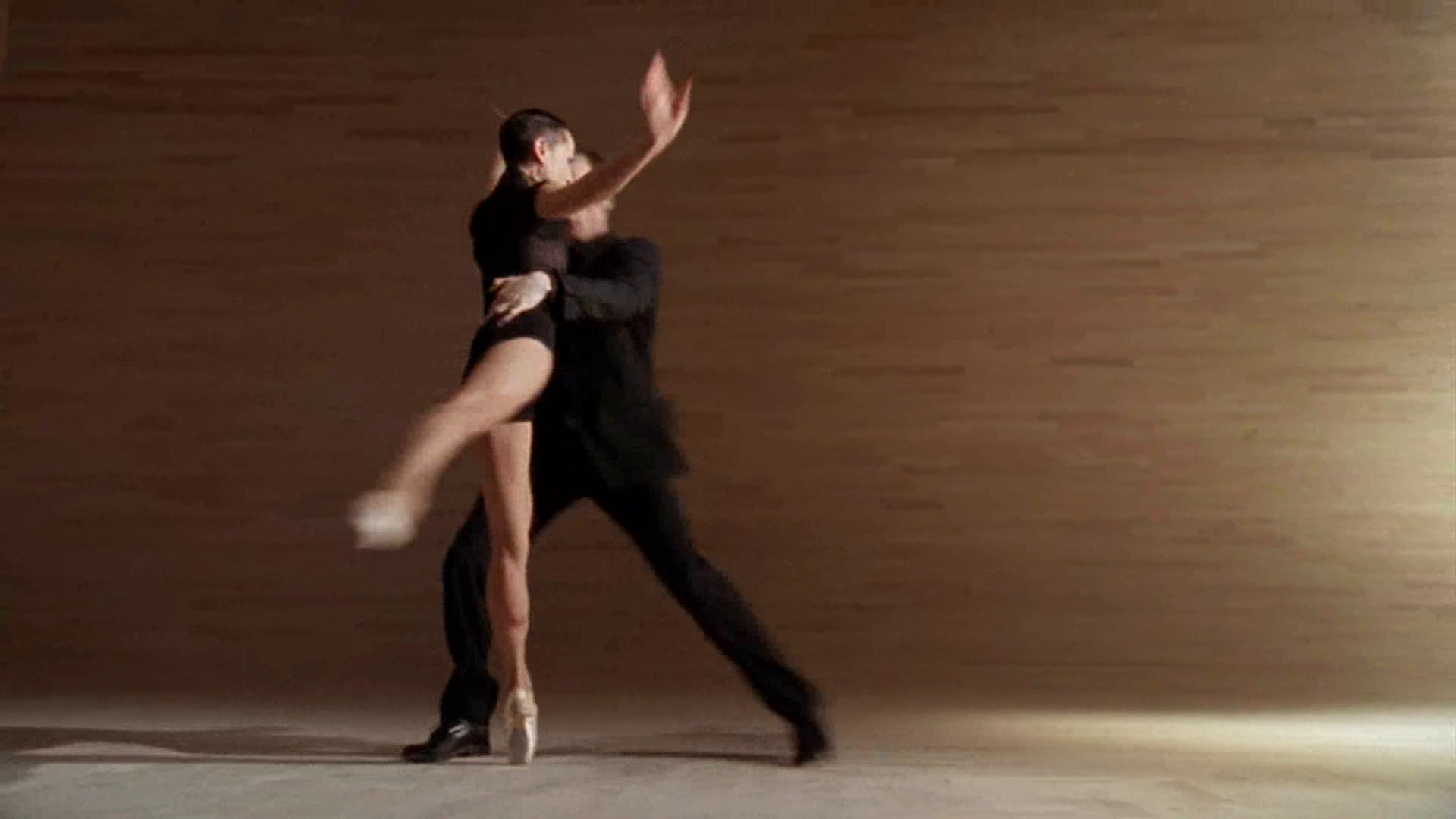
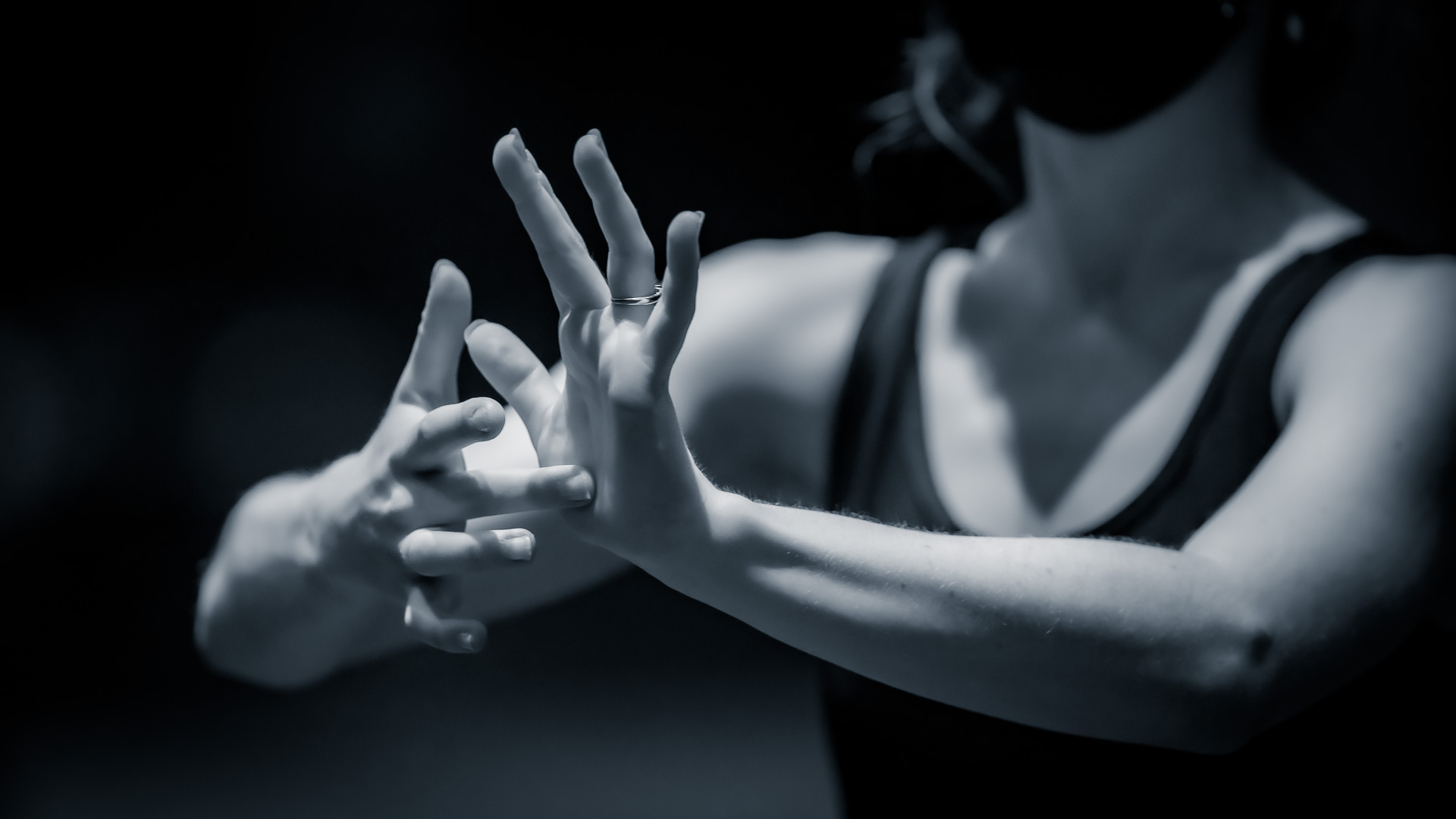
| "To observe the body in its traditional and idealized form, only to then lose that impression as distortions related to choreographic detail, complexity and environment are introduced, is something I find interesting."| "The stage can use visual stressors like directional lighting, insufficient lighting, and shadows, to reenact the complexity found in natural environments, ...| ... in order to encourage the audience to project themselves into the dark areas and so link themselves to the work and the dancer in personal and subjective ways."
| "I think ballet technique remains a powerful tool for addressing contemporary themes and for exposing conflicts inherent in our evolving perception of the body."
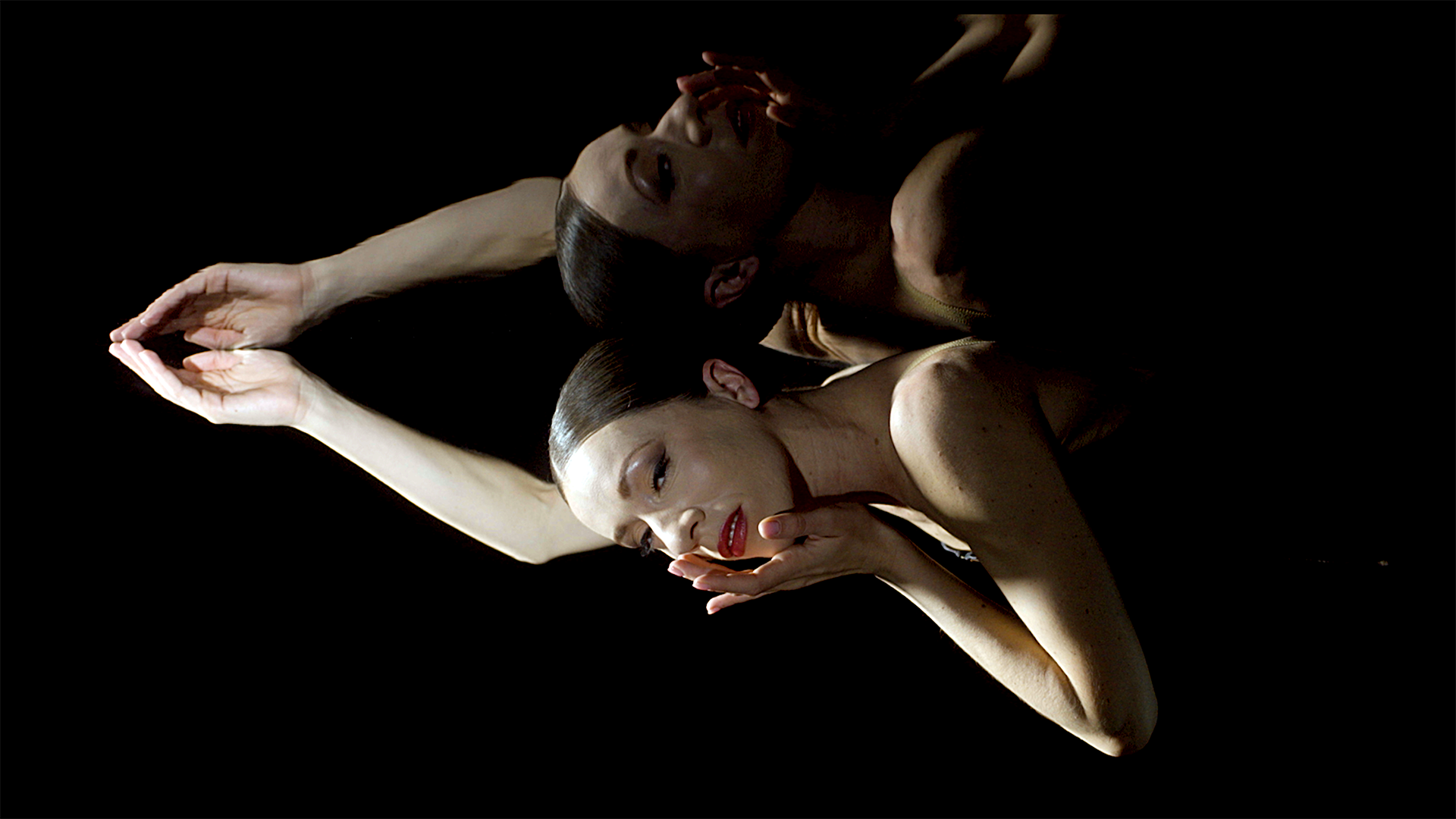
World premiere screening and performance
of "Echo" at Salle Wilfrid-Pelletier
Edouard Lock had not created for Les Grands Ballets for over twenty years. In a long-overdue collaboration, he presents an electrifying solo, the fruit of a choreographic reflection during the pandemic, created for LGBC's first dancer Rachele Buriassi.
Two world premieres, one cinematic and one choreographic, occurring on the same stage and on the same night, both authored by Edouard Lock.
MORE INFO
Première mondiale et présentation
chorégraphique de "Echo" à la Salle Wilfrid-Pelletier
Édouard Lock n'avait pas créé pour Les Grands Ballets depuis plus de vingt ans. Il présente cette fois un solo électrifiant pour une danseuse, fruit d'une réflexion chorégraphique durant la pandémie, créée pour la première danseuse LGBC Rachele Buriassi.
Deux premières mondiales, une cinématographique et l'autre chorégraphique, seront dévoilées sur la même scène, le même soir; les deux signés Édouard Lock.
PLUS D'INFO
Edouard Lock began his choreographic career at the age of 20 and founded La La La Human Steps in 1980. Over the years Mr. Lock has been invited to create works for some of the world's leading dance companies, including the Paris Opera Ballet, the Het Nationale Ballet of Holland, The Nederlands Dans Theater, the Cullberg Ballet and the Royal Ballet of Flanders. He co-conceived and was artistic director for David Bowie's world tour, Sound and Vision. He also collaborated with Frank Zappa on the Yellow Shark concerts. Other musical collaborations include Gavin Bryars, Einstürzende Neubauten, Steve Albinni (Shellac of North America), David Lang, Iggy Pop, Kevin Shields (My Blue Valentine), David Van Tiegham, and the West India Company.
At the invitation of Robert Carson and the Paris Opera, Mr. Lock choreographed "Les Boréades" composed by Rameau and performed by his company LHS at Le Palais Garnier. His works have garnered many awards, including the Chalmers choreographic prize, the New York Dance and Performance Award, the Prix Denise-Pelletier, the National Arts Centre Award, the Benois de la Danse choreographic award given in Moscow, the Governor General's Performing Arts Award, the Premio Positano Leonide Massine Award, The Molson Prize given by the Canada Council for the Arts and an honorary doctorate granted by the Université du Québec.
Various films have been made on Mr. Lock's work including Le Petit Musée de Vélasquez directed by Bernar Hébert, and the documentary Inspirations by British director Michael Apted, which also included Roy Lichtenstein, Tadao Ando and David Bowie amongst others. The film adaptation of Amelia, directed by Edouard Lock, had its American premiere at the 2004 Tribeca Film Festival and its European premiere at the Karlovy Vary International Film Festival. The film won its category at the Chicago International Film Festival, the Prague International Film Festival and the Rose d'Or Festival in Switzerland as well as winning two I.C.E. and two Gemini Awards for best direction and best editing.
Mr. Lock was named a Chevalier de l'Ordre National du Québec and Officer of the Order of Canada.
Édouard Lock, fondateur, directeur artistique et chorégraphe, débute sa carrière en 1974, à l'âge de 20 ans, en créant de nombreuses oeuvres pour des compagnies de danse canadiennes telles que Le Groupe Nouvelle Aire et Les Grands Ballets Canadiens, ainsi que pour des institutions culturelles comme le Musée des Beaux-Arts et le Musée d'Art Contemporain de Montréal. Il fonde La La La Human Steps en 1980, une compagnie qui jouit d'une grande renommée nationale et internationale. Au fil des ans, Édouard Lock a été invité à créer des oeuvres pour quelques-unes des plus illustres compagnies de danse au monde, au nombre desquelles le Ballet de l'Opéra de Paris, le Nederlands Dans Theater et le Het Nationale Ballet de Hollande. Ses oeuvres lui ont valu de nombreuses distinctions dont le Bessie Award (New York Dance and Performance), à deux reprises, pour Human Sex, le prix Denise-Pelletier en 2001, soit la plus haute distinction accordée par le Québec dans le domaine culturel, le Prix du Centre national des Arts du Canada et le Benois de la Danse, ce dernier lui ayant été décerné à Moscou en 2003 pour AndréAuria, un ballet applaudi par la critique et dont la première a eu lieu à l'Opéra de Paris en octobre 2002. Sa compagnie, La La La Human Steps, a participé en 2003 au spectacle Les Boréades de l'Opéra National de Paris.
Édouard Lock a été directeur artistique et co-concepteur de la tournée Sound and Vision de David Bowie en 1990, et a contribué au concert de Frank Zappa, The Yellow Shark. Une adaptation cinématographique du ballet Amelia, film réalisé par Édouard Lock, a été montrée en première américaine au Tribeca Film Festival de New York, et en première européenne aux Festival de Films International de Karlovy Vary à Prague. Sa plus récente présentation s'est tenue au Slamdance International Film Festival (Park City, Utah). Amelia a remporté le premier prix de sa catégorie au Chicago Film Festival, au Festival de Télévision de la Rose d'Or, en Suisse, et au Festival International de la Télévision Golden, à Prague. Le Festival International de Télévision de Banff (Canada) lui a décerné son Prix du Jury, faisant d'Amelia l'oeuvre gagnante toutes catégories. Le film a aussi gagné deux prix Gemini dans les catégories meilleure réalisation et meilleur montage, deux I.C.E., catégories meilleure direction de la photographie et meilleur montage, un American Choreograpy Awards dans la catégorie accomplissement chorégraphique exceptionnel dans un court métrage, et a été finaliste aux International Emmy Awards. Ce film a été télévisé mondialement, entre autres sur la chaîne Arte et sur Channel 4, au Royaume-Uni.
Édouard Lock a été nommé Chevalier de l'Ordre national du Québec en 2001 et Officier de l'Ordre du Canada en 2002.
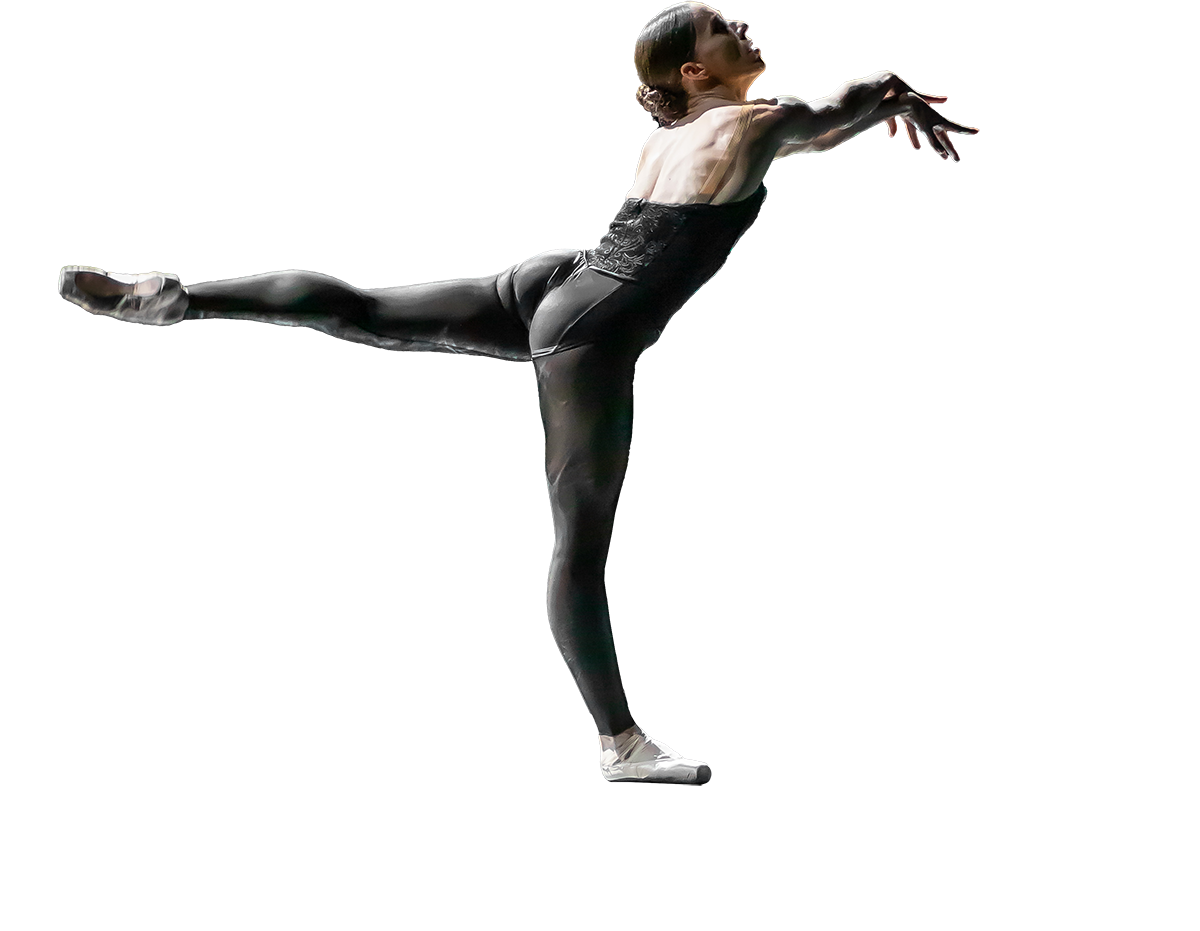


Production of "Echo" in collaboration with Les Grands Ballets Canadiens
A dance intertwined in reflections and shadows, presented in a cinematographic hall of mirrors. Each reflection shaping, distorting and fragmenting balletic geometry. Body shape splayed between an ideal and the distortions inhabiting a cinematic night, where mirrored approximations ebb along surfaces like shadow on water. The ballerina peers into herself and then falls into herself. Her memories float up, around and under her. From there they look up at her as she looks down, up, over and into each of them; Everyone one leading to a different trail and a different outcome. Each one a resolution leading back to one shared beginning. One source, multiple echos, one end.Edouard lock directs and choreographs. Rachele Bouriassi dances. The combination achieves the rhythm, cadence and precise geometry associated with Lock's choreographic language.
Lines melding into blurs, abstraction residing in the rapid exchange of shapes and stances, each flowing through the choreography like wind in grass. Ms Bouriassi's technical prowess, interpretation and acting extend beyond dance while keeping her dancing close to each. Feelings of solitude during confinement inspired this solo piece, a lone ballerina dances with her reflection during this intimate and precise choreography. James O'Callaghan's score resonates both dissonance and harmony, cooling every image that passes through his precise and evocative score.
A world where illusion and dance have only one echo.
Production de "Echo" en collaboration avec Les Grands Ballets Canadiens
Une danse où reflets et ombres s'entrecroisent, présentée dans une galerie cinématographique toute en miroirs. Chaque reflet façonne, déforme et fragmente la géométrie du ballet. La forme du corps s'affiche entre un idéal et des distorsions qui hantent une nuit cinématographique, où les approximations reflétées par les miroirs se déplacent le long des surfaces comme l'ombre sur l'eau. La ballerine plonge en elle-même, puis s'effondre sur elle-même. Ses souvenirs flottent en haut, autour et en-dessous d'elle. De là où ils sont, ils la suivent des yeux tandis qu'elle regarde vers le bas, vers le haut, par-dessus et à l'intérieur de chacun d'eux. Chaque souvenir mène sur un autre chemin et à une issue différente. Chacun d'entre eux est une résolution qui entame un retour en arrière vers un début commun. Une origine, des échos multiples, une fin.De ce ballet, Edouard lock en est le metteur en scène et le chorégraphe. Rachele Buriassi est la danseuse. Cette association permet d'obtenir le rythme, la cadence et la géométrie précise associés au langage chorégraphique de Lock.
Les lignes se fondent dans le flou, l'abstraction résidant dans l'échange rapide de formes et de positions, chacune d'entre elles traversant la chorégraphie comme le vent dans l'herbe. Les prouesses techniques, l'interprétation et le jeu de madame Buriassi vont au-delà de la danse, tout en la gardant en mouvement proche de chaque spectateur. Les sentiments de solitude ressentis pendant les périodes de confinement ont inspiré cette pièce solo qui met en scène une ballerine solitaire qui danse avec son reflet au rythme d'une chorégraphie intimiste et précise. La partition de James O'Callaghan résonne toute en dissonance et en harmonie, apaisant chaque image qui passe par sa musique claire et évocatrice.
Un monde où l'illusion et la danse n'ont qu'un seul écho.